Google tells me, “Principled” describes someone who acts with strong moral integrity, honesty, fairness, and justice, adhering to a consistent code of right conduct rather than convenience or self-interest, often taking principled stands on issues and showing respect for others’ dignity. It signifies being guided by deep-seated moral rules, meaning actions are consistent with one’s beliefs and values, even in difficult situations.
My caveat: Principled, not perfection.
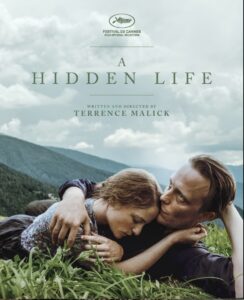
There’s a line in a beautiful movie, “*A Hidden Life,” that I highly recommend:
It is better to suffer injustice than to commit it.
(This principle is attributed to Socrates, I believe.)
Google goes on to say, “The story of Franz Jägerstätter, an ordinary Austrian farmer who lived a simple life but whose refusal to support Hitler during WWII became a powerful act of conscience, illustrating George Eliot’s idea that the world’s good is built on “unhistorical acts” by those living faithfully in obscurity. It highlights the profound impact of quiet, principled resistance, contrasting the “hidden” life of faith and moral integrity with the loud, often corrupt, demands of the world, suggesting true significance isn’t found in fame but in inner conviction, as shown by Jägerstätter’s choice to follow his conscience…”
Last month, I was in the backseat with my seven-year-old grandson, Brooks. All was quiet when he leaned in and asked, confidentially, “Gaga, what’s your understanding of devolve?”
That day, I gave him my too-wordy definition, and he sort of blinked and simply said, “Oh, so the opposite of evolve?”
I didn’t realize I could have just said that.
I didn’t give any, but I could have cited too many examples of devolution, base instincts gone hard-core depraved, and even more so than one month ago. Carnival barkers everywhere. Click on the news, and, unholy moly, who—what—have we become?
It’s not rhetorical, and it’s not virtue signaling.
Brooks is an innocent child with questions. Some I cannot answer.
What I can’t answer, I can show: I can show him what it means to be principled. Simple, and mostly hard.
That I can do.
*A last comment from Google: The title (“A Hidden Life”) comes from George Eliot’s novel Middlemarch, which celebrates those who live “faithfully a hidden life, and rest in unvisited tombs,” suggesting their quiet goodness underpins the world’s well-being.
May the grass around my tomb have no footprints.